Recently I gave a wine presentation at Texsom. If not familiar, Texsom is a sommelier-wine conference in its 21st year. The conference was created by friend and fellow MS, James Tidwell. Starting with the earliest iterations, Texsom has always been about promoting Texas wines and sommeliers. But the conference has grown to embrace all facets of the industry to become one of the very best wine events held in the U.S. Top winemakers from around the planet regularly present on their wines not to mention dozens of wineries and importers who are part of the two days of tastings for attendees.
James asked me to present on tasting this year as one of the first three seminars. He suggested my session be called “An approach to tasting.” This knowing the attendees would be a mix of students and professionals, not to mention those trained through the Wine & Spirit Education Trust as well as the Court of Master Sommeliers. So my focus had to be non-denominational, meaning the concepts had to have global application. With that, I chose two topics for the 75-minute presentation: basic and advanced tasting skills, and how we internally process wine.
When I present at conferences, I typically make the PowerPoint I use available in PDF format to attendees after the fact. However, this year’s presentation featured very little information and just major talking points. In other words, I wrote the PowerPoint with little more than bullet points and didn’t copy and paste War and Peace on to slides. To that point, the less on a slide, the easier it is for attendees to read it—and they might end up listening to you. Regardless, there was so much information I covered in the seminar that I’ve encapsulated it in two blog posts.
This first post is about basic and advanced tasting skills.
Advanced Tasting Skills
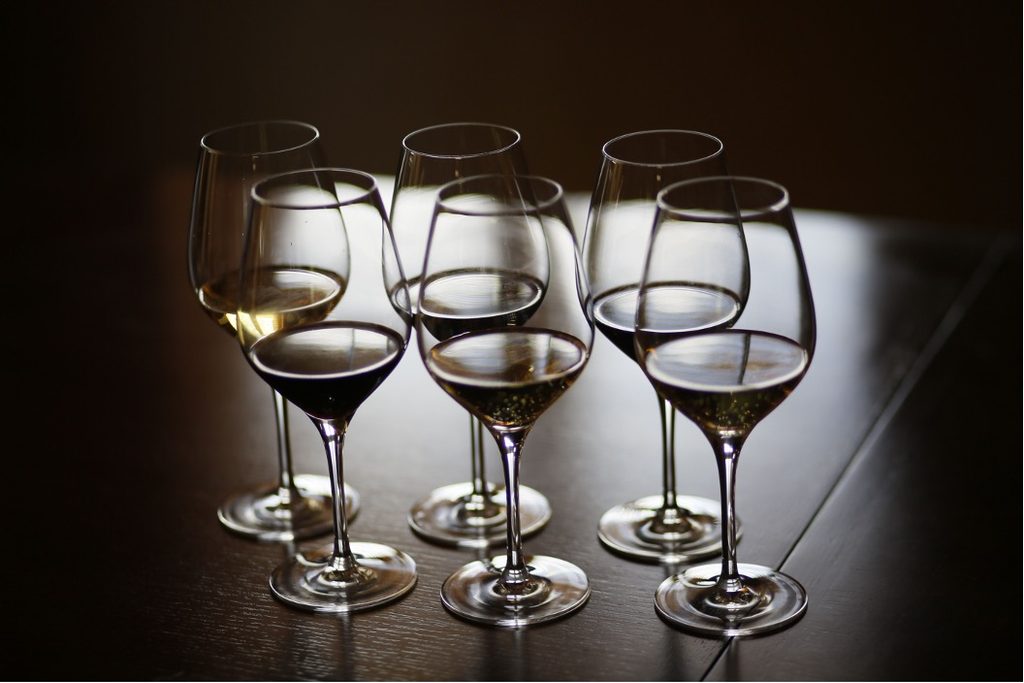
In addition to the topics I covered, James and I worked together to choose a flight of wines that would be tasted during the session to illustrate various points in the material. Here are the six wines:
- 2025 Tornatore Etna Bianco: I chose an Etna Bianco to illustrate its distinctive volcanic minerality and high acidity.
- 2017 Markus Huber Riesling Ried Berg ÖTW Erste Lage, Traisental, Austria: A complex nine-year-old premier cru Austrian Riesling from a top producer that showed TDN-petrol notes.
- 2022 Domaine Zind-Humbrecht Muscat, Alsace: Exotically floral and perfumed dry Muscat from one of Alsace’s best domains that showed terpenes, a touch of botrytis, and phenolic bitterness.
- 2023 Domaine Guiberteau Saumur Rouge: A classic Loire Valley Cabernet France from an outstanding small producer showing chalky-gravelly minerality and green pyrazenic notes.
- 2020 Paul Jaboulet Aîné Thalabert Rouge Crozes-Hermitage: Textbook Northern Rhône Syrah from an iconic producer. Savory, peppery, and layered.
- 2023 Ravenswood Zinfandel “Teldeschi Vineyard,” Sonoma County: A great example of an old vines Zinfandel that had 15-plus percent alcohol and yet was still balanced.
I started the presentation by reminding everyone that there were two ultimate goals for anyone in the industry. First, to be able to judge wine quality. Regardless of what we do or how we were trained and certified, the one thing we all need to be able to do is judge quality. If we’re hired to be a buyer in any context, be it White Zinfandel and box wine for a corner market or domain-bottled Burgundy for a Michelin-star restaurant, our job is to judge wine quality and choose the best wines. That also goes for anyone writing or someone judging a wine competition, where medals are handed out to the best wines. Ultimately, judging wine quality is the end all and be all of the industry.
Second, to be able to share what we know. It’s implicit in the industry that we share and teach what we know to newer generations. Some aspect of training is part of most wine jobs. But the more we as professionals can share what we know through writing, teaching, and coaching, the better off the industry is and the more informed consumers are about wine.
Basic and advanced tasting skills
With that, I dove into the first section of the presentation on basic and advanced tasting skills: six aspects of tasting I think students need to learn to have success and professionals need to own and use on the regular.
1. Expertise with a grid
I told the group that regardless of what wine certification organization they had been trained in, they used a tasting grid.A grid gives us a way to be consistent about how we approach wine—which in turns makes us consistent as tasters. I told the group that the WSET and MS grids were the two major versions used by students. And despite the fact that one was used for written exams and the other for oral exams, they had more in common with each other than differences.
Regardless of the organization, I told attendees that one needed to know the grid so well that they could teach it. After all, everyone in the audience was already teaching or wanted to do so. I also suggested to the students that they adopt the perceptual position of a teacher. If you know something so well you can teach it, it’s in long term memory and you’ll never forget it.
I then challenged the students in the group to find someone—a friend or family member—and explain the grid to them. But there’s a catch. They had to do it from memory and without wine in hand. The idea being again to explain/teach something complex in its most basic terms.
2. Know Cause and Effect as it applies to a tasting grid
Point two is an extension of the first. Applying the idea of Cause and Effect to whatever grid one uses. Cause and Effect is the why behind the way a wine looks, smells, and tastes the way it does. For example, things that impact wine color. In white wine, that includes age, time in oak, skin contact, and botrytis. Cause and Effect for the nose and palate includes elements such as the following:
Grape chemistry: aroma and flavor compounds like pyrazines, terpenes, and rotundone that contribute to grape variety markers.
Viticulture: fruit condition as related to climate, harvest timing, botrytis, Brettanomyces, and more.
Winemaking: skin contact, lees contact, ML, carbonic, stem inclusion, use of oak, and more.
Note that all the previous are impact compounds that I would shortly mention again. Otherwise, I suggested to the students in the group that they also be able to explain the idea of Cause and Effect to someone who’s not in the industry—again without wine in hand.
3. Know impact compounds and connect them to classic grapes and wines
Impact compounds are a subset of aromas and flavors that are vital for students being able to identify classic grape varieties and wines in tasting exams. Impact compounds are equally important for industry professionals to be able to judge wine quality. Here are the impact compounds I listed for the group in my presentation.
Pyrazines: The green bell pepper, green herb, and grassy notes in Sauvignon Blanc and Cabernet Sauvignon-family red wines.
Rotundone: The white pepper notes found in Grüner Veltliner, and white and black pepper notes found in Syrah and other Rhône grapes as well as Zinfandel.
Terpenes: The floral and sweet citrus elements found in semi-aromatic and fully-aromatic white grapes. Practically all of which also show phenolic bitterness.
Phenolic bitterness: The bitter notes found in the finish of semi-aromatic and fully-aromatic white wines.
TDN: The fusel-petrol notes found in some Rieslings.
Botrytis: A mold that lives in vineyard soil whose spores pierce grape skins, raisinating them and changing the flavor profile.
Diacetyl: Buttery and buttered popcorn notes from malolactic fermentation.
Lees contact: Yeast, toast, and brioche notes from keeping a young wine in contact with the lees after fermentation.
Use of new oak: A wine showing new oak markers such as vanilla, baking spices, and more.
Raisination: As implied, a wine showing raisinated flavors from over ripe grapes.
Carbonic maceration: Candied or Hawaiian Punch notes from a red wine made with Carbonic maceration. Beaujolais Nouveau and Beaujolais-Villages are commonly fermented using carbonic maceration.
Stem inclusion: Green stemmy flavors from a red wine fermented with whole clusters of grapes including the stems. Wines made using carbonic maceration usually have stem tannin.
High VA: vinegary notes found in certain red wines.
Brettanomyces: A yeast found in vineyard soil that gets on to the vine and grapes, ultimately ending up in the wine. Brett, as it’s often called, smells and tastes leathery, earthy, and barnyardy. It’s often found in certain red wines.
4. Focus on the Evil Dwarfs
The dwarfs are a subset of white and red grapes and classic wines often confused by students. The challenge with both sets of grapes/wines is that they often look similar (or the same) and have similar fruit qualities. However, the combination of impact compounds and structure levels is unique in each wine.
White wines include the following:
Albariño: Spain – Rias Baixas
Grüner Veltliner: Austria
Chenin Blanc: Loire Valley – Vouvray and Savennières
Pinot Gris: France – Alsace
Pinot Grigio: Italy – Alto Adige
Riesling: France – Alsace, Germany (trocken), Austria
Red wines include the following:
Pinot Noir: France – Côte de Nuits/Beaune
Pinot Noir: California/Oregon
Gamay: France – Beaujolais-Villages
Sangiovese: Italy – Tuscany – Chianti Classico
Tempranillo: Spain – Rioja Reserva and Gran Reserva
Grenache Blends: France – Southern Rhône
Nebbiolo: Piedmont – Barolo and Barbaresco
I suggested strategies to the students for practicing tasting the Evil Dwarfs. First, to get a Coravin so they could buy best examples of the wines and taste them repeatedly. Next, to practice tasting the wines in pairs using an easy “control” wine and tasting the others against it. I mentioned that our brains learn quickly in binary by seeing two things and comparing them.
5. Assessing structure
After Cause and Effect and impact compounds, being able to assess the structure of a wine accurately and consistently is the most important thing a taster must be able to do. I told the group that the structure elements of a wine are its very bones—the product of the vineyard’s climate and the grape itself. The structure can also be altered by winemaking (acidulation and alcohol removal). Otherwise, the structural elements in wine include acidity, alcohol, phenolic bitterness in white wines, and tannin in red wines.
The challenge with assessing structure in wine is somehow being able to quantify what you’re tasting and feeling on the palate. While it’s easy to benchmark extremes such as high tannin, acidity, and alcohol, being accurate with lesser amounts can be problematic. I told the group that the good news was that I would show them a quick strategy to use an internal visual cue to calibrate structure. The bad news for those of you reading this post is that you’ll have to wait until the next installment to read about it. Until then, the last point of the first part of the seminar.
6. Using pattern recognition for making conclusions in blind tasting
The last of the six points was about making conclusions for blind tasting, easily the most difficult part of the process. I emphasized making the process as streamlined as possible to the students in the group and suggested a strategy called pattern recognition.
A pattern used for making a conclusion in a blind tasting consists of the three-to-five most important things about the wine. Those things could include the fruit quality, impact compounds, and anything notable about the structure.
To establish the pattern of a wine I suggested students use a series of questions to narrow down all the information in the glass to the most important aspects. Questions for white wines included the following:
White Wine Questions
Does the wine have new oak?
If a white wine has new oak, the possible grape variety or blend narrows down considerably. Think Chardonnay, Sauvignon Blanc (or blends), Viognier, and Rhône blends.
Does the wine have obvious earth and mineral—or not?
A white wine showing obvious earth and mineral is usually from Europe. There are, of course, exceptions.
Does the wine show impact compounds that can help me identify it?
Connecting the impact compounds listed previously to their respective classic grapes and wines.
Is there anything about the wine’s structure I should note?
Noting extremes in the wine—low alcohol, high tannin, or whatever.
Red Wine Questions
Was the wine made from a thinner or thicker-skinned grape?
Here is where the appearance of a red wine can provide clues to the grape variety. Lighter-colored red wines such as Pinot Noir and Gamay vs. deeper-colored red wines from Syrah or Cabernet Sauvignon.
Does the wine have obvious earth and mineral—or not?
Like white wines, a red wine showing obvious earth and mineral is usually from Europe.
Does the wine show impact compounds that can help me identify it?
Again, connecting the impact compounds listed above to their respective classic grapes and wines.
Is there anything about the wine’s structure I should note?
Noting structural extremes in the wine—or the lack thereof.
I’ll stop here at the end of the first part of my presentation. The next post will cover the strategies I used with the group about eye positions and patterns when smelling and tasting, and using an internal visual cue for assessing structure. More to come.
Want a crash course in how to taste wine?
Join my Review Team and get an advanced copy of my upcoming wine book, full of answers to all the wine questions you felt too embarrassed to ask. CLICK HERE