There are times when I think we get so caught up in blind tasting for exams that we lose sight of the prime directive of all wine education and certification, which is to be able to judge quality. Regardless of the exam track one follows, the ultimate goal of all wine education is the same—to be able to judge the quality of any wine, irrespective of type, price point, or packaging. The latter a nod to having to taste box wines, which I’ve done before in competitions.
The end game of any wine certification is the same. Study and train to become a good taster. However, the metrics of being a professional taster don’t necessarily equate to being a whiz at blind tasting. It’s far more useful to be able to taste 10 Viogniers under $35 retail and choose the best one—and then be able to explain why.
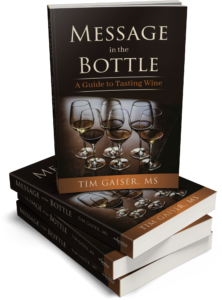
Dear friend and fellow MS, Madeline Triffon, repeatedly emphasizes judging quality during our monthly Zoom tastings for Master the World. The same holds true when she mentors students in the MS program. In fact, thanks to Madeline, there’s a chapter in my book, Message in the Bottle, called “Judging Wine Quality.”
If you think about it, the job of any wine buyer is to be a filter of sorts. Tasting through a myriad of bottles and judging quality so they can offer wines on their list or retail shelves that they can guarantee without hesitation.
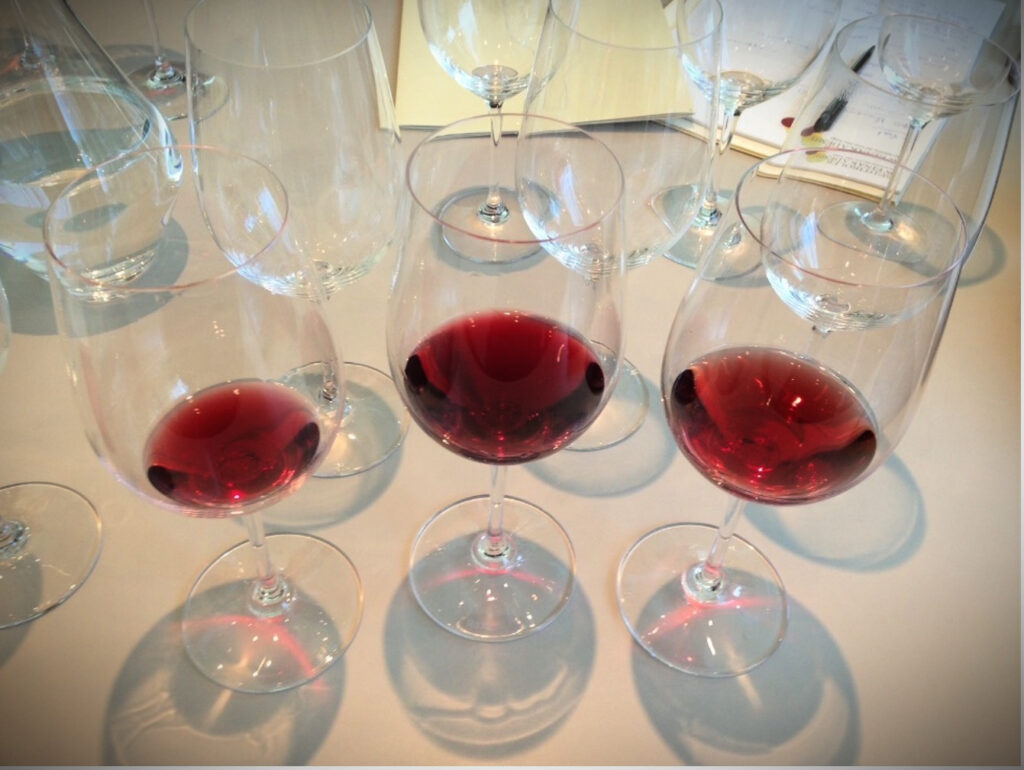
The latest Master the World tasting focused on wine quality. The session included a flight of six wines tasted blind by Zoom attendees all over the country, with Maddie and I talking through the wines, emphasizing why they were chosen and what made them of good quality.
Madeline started the tasting off with a PowerPoint slide titled “What makes a wine good, even great? She then listed the following under “classic quality categories.”
Judging wine quality
Fruit: For Madeline, any quality wine shows a purity of fruit that is instantly recognizable. It’s a purity that goes beyond the fruit’s condition or ripeness.
Length: Any quality wine should have a long finish. But Madeline also said that some good young wines can drop off in flavor.
Complexity/depth: A quality wine will show multiple layers of aromatics and flavors, all contributing to the depth of the wine.
Promise/age-ability: Practically all quality wines age well, meaning they’re balanced to begin with.
Balance: Balance is my personal metric for quality. Any wine must have a good balance between the fruit and the acidity—be it natural or added acid. Add tannin to the mix with red wines. To me, wines with higher acidity tend to be more complex, ageable, and pair well with food. Wines that lack natural acidity, not so much. Adding tartaric acid, or acidulating, is common winemaking practice.
Typicity: Quality wines should be typical for their type or region.
“Je Ne Sais Quoi” – you know it when you meet it! Maddie’s idea here is that with enough tasting experience, a high-quality wine makes itself known to you within seconds. It’s especially important when you may not have previous experience with a certain grape variety or style of wine.
I’ll add two things about judging wine quality in the form of context and previous experience. Context being all the variations in how the wine is tasted, from the tasting environment to the wine to the taster. Also, previous experience based on one’s memories of classic grapes and wines that serve as a frame of reference.
Madeline’s flight of wines for the Zoom MTW tasting was eclectic and delightful. Here are my notes about each wine, including an answer to her question about why the wine was good, or maybe even great.
1. 2023 Prager Riesling Ried Steinriegel, Wachau, Austria
Maddie started off the flight with an Austrian Riesling. No surprise as she and I—along with five other MS colleagues/good friends, spent five days in Austria last April tasting at some of the country’s top wineries. Prager was one of them.
Sight: medium-straw green
Nose: green apple/pear, key lime, and white peach/nectarine—all fresh, ripe, and tart. Also, citrus blossom, lemon verbena, and a tightly wound knot of SO2, TDN, and mineral.
Palate: the fruit turned tarter with the SO2/TDN/mineral trio dominating and high acidity making for a long and persistent finish.
What makes the wine good?
A superb wine from one of the Wachau’s great vineyards made by one of the top producers. As for quality, the Steinriegel Riesling checks the boxes for purity of fruit, complexity, balance, length, and potential ageability. I’ll also add high dry extract as the wine was made from a low yielding vineyard with older vines.
2. 2023 Brewer-Clifton Chardonnay, Santa Rita Hills
Maddie and I have both known Greg Brewer’s Chardonnays for eons. We find them to be atypical for California Chardonnay in that they are the opposite of the large, sometimes blowsy oak bombs that are the darlings of the Appleby’s crowd. Instead, Greg’s wines are tight wire acts, balancing just barely ripe fruit with high acidity, and hints of lees contact, ML, and oak. The wines are nuanced, elegant, and understated.
Sight: medium yellow with green
Nose: red/yellow apple and ripe pear with Meyer lemon. Also, toast, butter cream, slight mineral, and oak spice.
Palate: a seamless blend of ripe and tart fruit, lees, oak, and saline-mineral.
What makes the wine good?
The combination of balance, purity of fruit, and length. I’ll also vote for the Je Ne Sais Quoi factor in that the wine was simply delicious—everything you want Chardonnay to be.
3. 2024 Left Foot Charley Blaufränkisch, Old Mission Peninsula
Madeline will be the first to tell you how good the wines from Michigan are. After all, she’s watched the industry there evolve for decades. Otherwise, Bryan Ulbrich has been making wines from vineyards in the Old Mission Peninsula since 1995. He joined us during the Zoom group chat after the tasting, answering questions about his wine, the Michigan industry, and the challenges of growing grapes in a northern climate.
Sight: deep ruby with purple rim
Nose: ripe and tart red fruit including cherry, strawberry, and plum with blackberry and black raspberry. Also, violet floral, Bergamot tea, savory herb, and black pepper with turned soil, sandalwood, and light baking spices.
Palate: tarter red fruit, pepper, and savory notes with earth and oak. Soft tannins with acidity to balance.
What makes the wine good?
I’ve always thought Blaufränkisch was like the love child of Pinot Noir and Syrah. The former because of its soft, refined tannins, and the latter because of its peppery, savory qualities. Beyond that, Bryan’s wine is the best domestic Blaufränkisch I’ve ever tasted and would easily hold its own with similar wines from Austria and Germany.
4. 2019 Nicosia Lenza di Munti Etna Rosso DOC
In 2008 I visited Etna and tasted at several wineries. Even then, I described the red wines as “volcanic Burgundy,” in that they showed an innate elegance with what I described as “screaming minerality.” Madeline has also been to Etna. We agree that it’s one of the most unique places in the wine world.
Sight: medium ruby with garnet
Nose: predominantly red fruit—ripe, dried, and tart—with some darker fruit as well. Potpourri and dried rose with black tea and dried herb, anise, sandalwood, and leather. Pronounced volcanic minerality and used wood. A bit of VA.
Palate: Surprising concentration but not heavy. Fruit turns tarter with more leather and secondary notes. Minerality dominates along with high acidity. More tannin than expected. Long, persistent, and complex.
What makes the wine good?
My volcanic Burgundy moniker nails the wine. Volcanic minerality to me has a distinct gritty/grainy texture. I find the same texture in Aglianico from Campania and Assytriko from Santorini, both also from volcanic soils. Otherwise, the Nicosia shows high quality in the form of concentrated fruit, razor-like balance, depth, complexity, and ageability. It’s also a very good representative of type.
5. 2021 Montaribaldi Gambarin Langhe Nebbiolo, Piedmont
The second of two Italian reds was probably more recognizable to many blind tasting in the Zoom crowd. Although the wine didn’t show much evolution in the color, as most Barolo’s and Barbaresco’s do, the signature floral, dried and tart red fruit, and savory notes with high tannin and acidity were there. Madeline also made a comment about how good lower-tier Langhe Nebbiolo can be from a top Barbaresco producer like Montaribaldi Gambarin. It reminds me of a similar relationship between good Châteauneuf producers and their basic Côte du Rhone wines.
Sight: ruby with rose-garnet at the rim
Nose: ripe, tart, and dried sour cherry, red plum, and red raspberry with dried rose, tomato leaf-herb, turned soil, mineral, and light wood spice.
Palate: signature Nebbiolo high tannins (especially grape tannins) and high acidity, with a touch of VA and a long, drying finish.
What makes the wine good?
Madeline pointed out how the wine punched far above its weight class with considerable depth, complexity, ageability, and typicity. I also thought the wine was balanced despite how tannic it was. Context, as in what the bones of a grape/wine are, matters when assessing balance and complexity.
6. 2016 La Croix Saint-Estèphe, Bordeaux
The last wine of the flight was a textbook example of Bordeaux with age from a good vintage. The Je Ne Sais Quoi thing was in force, and the wine was as complex as any in the flight.
Sight: opaque ruby with garnet at the rim
Nose: vinous—lots of bottle age with ripe and dried dark fruits, dried violet and green savory herbs, graphite, leather, mushroom-earth, cedar, and toast.
Palate: full-bodied and very dry with tarter dark fruits, dried herbs, and pronounced earth and cigar box-like notes.
What makes the wine good?
The 2016 La Croix Saint-Estèphe is the third wine from Phelan-Segur in Saint-Estèphe, and shows just how good Bordeaux continues to be, even wines without a stratospheric price tag. Otherwise, the wine nails all the quality categories. At ten years old, it’s just hitting its stride and will be enjoyable for another decade.
Madeline closed out the discussion by reminding everyone that learning to judge wine quality was a process unto itself. And as one became better at tasting—including blind tasting—one’s frame of reference for quality wines expands.
Finally, to note that the Master the World tastings are held monthly.
You can purchase the tasting kits at www.mtwwines.com. But you can also join any of the Zoom tastings without purchasing a kit.
I’ll be hosting the next tasting on Friday, March 27th, talking about making red wine conclusions in blind tasting. Hope you can join.
Register for the webinar here https://mtwwines.com/pages/webinars
Cheers
Learn everything you need to about wine.
Get the complete tasting guide.