Last night at dinner, I told Carla that I was considering having a dead bottle party. Her response was something along the lines of “what?” So I had to explain the concept. But even before I could do that, I had to provide some background.
To begin, there’s an innate curiosity that children seem to have in sharing anything food or beverage-wise that’s spoiled. The classic example is a bad carton of milk. Once discovered, it must be shared with everyone in the vicinity. Mind you, the bad milk concept does have its limits. Like when you’re at a little league game and discover the porta potty you just used would set off nuclear alarms if tested. “Hey everybody, you gotta’ try the one of the left. You’re not gonna’ believe how bad it smells.”
The bad milk paradigm also applies to wine, especially when you’re working a competition and tasting over a hundred wines in a day. Odds are that you and your panel will be tasked at some point with tasting a lesser category of wine. A category potentially so obscure as to almost guarantee the bad milk paradigm will apply.
To that point, on the last day of one competition, my panel was assigned the chore of tasting several dozen fruit wines. You might think it would be like working through different flavors of spiked Hawaiian Punch. Nothing could be farther from the truth. In fact, the 30 or so fruit wines my brave eno-mates and I tasted that day required considerable palate courage and perspicacity. It was like we were lashed to the mast of a sinking vino ship.
Of particular note were three citrus wines from Florida. Citrus and Florida. Theoretically, that should work. The reality was more like three remarkably flawed bottles of wines. Most memorable was the Key Lime wine. In my notes I described it as “English Leather Lime cologne spilled on the floor of a dirty men’s room in a Chevron station.”
I didn’t even have to share my tasting note with the rest of my panel. Soon all activity came to a screeching halt when everyone got to the lime wine.
“What the hell is this?” said the woman next to me.
“Dear god, that is truly awful,” said someone else.
All of which immediately got the attention of a couple of people walking past the table.
“What’s up?” one of them said.
“Here, you have to taste this. It’s incredibly bad.”
They agreed. Soon the bad milk paradigm kicked into high gear. In no time, we had a crowd around the table smelling the Key Lime Chevron wine. In fact, it was even a popular topic of conversation at dinner that night.
“Did you taste the Key Lime wine? It was beyond horrible!”
So we have a childlike and not-so-innocent fascination with sharing things that smell and/or taste bad. And that leads me to the idea of putting on a dead bottle tasting—which involves my personal cellar.
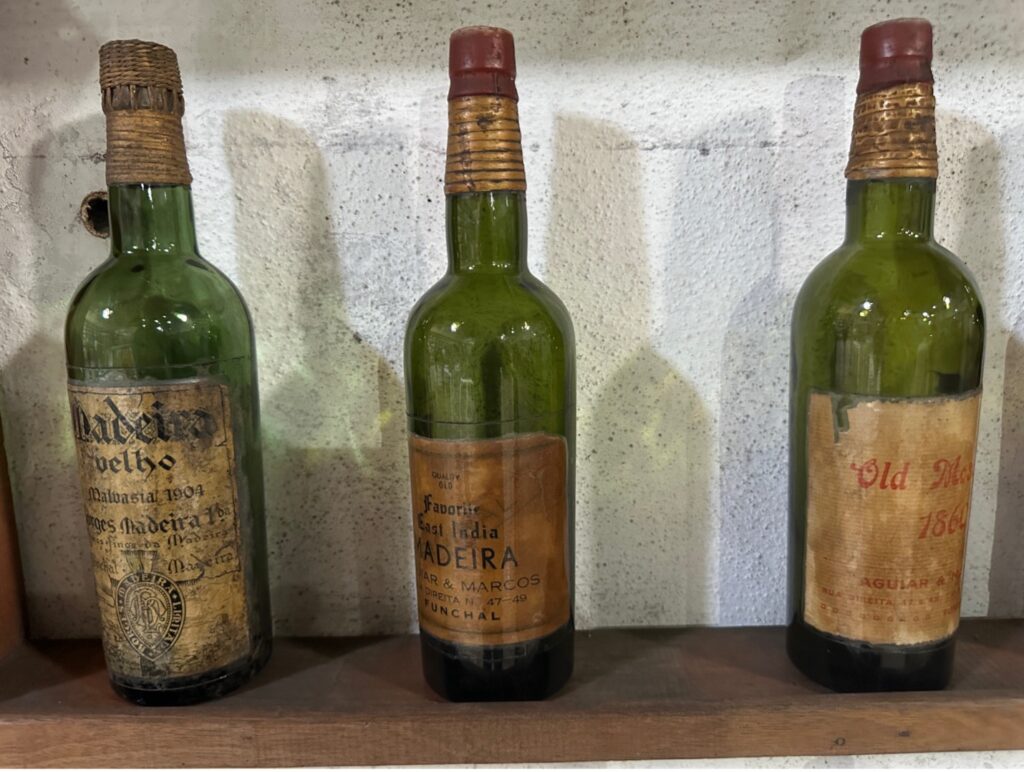
In short, my cellar is old. By old, you might get romantic notions of a remote Scottish castle with a dark damp cellar filled with old bottles of claret (Bordeaux) that have slept quietly unmoved for decades. But not so much.
Since the early 90s when I lived in the City, I stored my wine in Oakland at my good friend Joe Bilman’s business, Subterraneum. Which meant a 45-minute trip across the Bay Bridge to go visit my bottles. I did that on the regular, until we moved in 2017.
Even before then, my cellar could be best described as Swiss Cheese, as in full of holes. That was due to hitting it hard and often to trade or sell bottles. But then we moved back to New Mexico in 2017. In the process, I couldn’t take the wine and over 1,200 record albums with me.
The fact that we would be driving across Arizona at the end of August put the kibosh on including the wine and LPs in the move. So all of it remained in Oakland in storage sleeping peacefully away, until such time as I could either pay to have it shipped out or retrieve everything myself. I planned to do the latter in March of 2020. But then COVID shut everything down.
Finally, last spring, I had UPS freight ship the wine and records here. It was literally done overnight, with getting a call the next morning asking if I wanted it delivered that day.
By then, I’d set up an account at one of only two wine storage places in the entire state. Both are in Santa Fe, an hour away. Think about it. Two wine storage places in a state with over two million people. A few days after the wine was delivered, I rented a U-Haul van and transferred some 18 cases up to the new storage place. In the process, I touched every bottle of wine I own.
My take from the experience was that, once again, all the wine was old. After all, I didn’t even look at any of it for almost eight years. Which means the wines that weren’t ready to drink back then are now in their prime. And the wines that were in their prime eight years ago are headed towards feeble-dom. Some are old bones, as the Brits say. And traditionally, the Brits like to drink everything old, even the likes of non-vintage Champagne. Too bad we don’t live at Downton Abbey.
Meanwhile, all my wine is still old. Which is OK for a certain portion of the red wine and most of the German Riesling. You wouldn’t suspect the latter, but it’s true. German Riesling from the top producers, best vineyards, and good vintages can age for decades if cellared properly. At least I have that going for me.
Now we land the plane. More than a few times, I looked at a bottle when repacking it and thought, “what are the odds of this still being drinkable?” After pondering that same thing a few times, I wondered what I could possibly do with say half-a-dozen or more bottles of wine that are theoretically over the hill and now somewhere between chemistry projects and not-so-sentimental keepsakes.
That’s when the idea of a dead bottle party came to me. I could get a bunch of colleagues together and have a pot luck, preceded by a tasting of the suspect wines. Line the bottles all up on a table and let everyone have a go at them. It would be like a bad-milk extravaganza. Expletives and cries from being grossed out would rule the day. After the fact, we’d have to go out to the back patio and have a glass of bubbly to clear our heads and palates before enjoying dinner. Come to think of it, maybe stronger water like a shot of tequila would be in order. Whatever the case, it would be epic. I mentioned the idea to Carla. She was anything but convinced.
“So let me get this straight. You want to get a bunch of people together and taste all the bad wine in your cellar?
“That’s the idea,” I said.
“Well,” she said, “first of all, you don’t know anyone around here. I mean who could you invite that lives on our circle that even drinks wine? And would you really ask some of the people you know who live in Santa Fe to get together to try a bunch of old dead wines? I mean, really.”
She had a point. On further thought, it seemed like a stupid idea. Like the time I came up with the notion of using a really long squeegee to clean the windows of our sixth floor apartment in San Francisco from the roof. Talk about a stroke of genius.
Be that as it may, here are a few of the suspect bottles from my cellar with some thoughts:
1991 Williams Selyem Chardonnay, Russian River Valley: This would have been tasty until around 2005. It would probably have to be carbon-dated now.
1997 D’Arenberg Riesling “Dry Dam”: This was a bin end purchase from Virtual Vineyards (not even wine.com yet). Even in the beginning, it showed stunning levels of petrol. Only thing about TDN—the compound responsible for the fusel thing in Riesling—it gets worse with age. I’m thinking the Key Lime wine and it should get together and have cocktails.
1989 Ravenswood Zinfandel, Sonoma County: There’s an outside chance this bottle could still be good. The early Ravenswood wines were old school California reds that were hard as nails when young and could age long-term. I could be surprised here. Or not.
1975 Chateau Lanessan, Bordeaux: a gift from Armando Ghitalla, my trumpet teacher in grad school. It’s a sentimental bottle that is surely dead as a doornail–and that I will never open.
1980 Silver Oak Cabernet Sauvignon: I have singles of both the Alexander Valley and Napa Valley bottlings from the 80 vintage, which was the year we got married. And yes, we will open at least one of them in 2030 for our 50th. Typically, the Napa bottling does better in the long run. Sometimes, people age better than wine.
In the end, I may just start bringing home the dead-as-a-friggerzoid bottles a few at a time from storage. Then nipping into them using the Coravin to assess the damage. Otherwise, I’ll float the idea of a dead bottle tasting past my colleagues the next time we get together. Who knows, it could be the next big trend in home tastings. Because things may come and go out of fashion, but bad milk will always have its appeal. Prost!
Learn everything you need to about wine.
Get the complete tasting guide.